Watercolor Butterfly with Flower Clipart for Creative Projects
There is something quietly compelling about a watercolor butterfly resting beside a flower. The soft bloom of pigment, the organic edges, the natural pairing of two elements that already feel like they belong together. As a designer, marketer, or small business owner, you likely come across hundreds of design assets each month. Most are forgettable. But Watercolor Butterfly with Flower Clipart occupies a different space entirely. It does not scream for attention. It invites it, gently. And in a visual landscape where so much content feels aggressive or overly polished, that invitation matters.
Whether you are building a brand identity, designing packaging, creating social media graphics, or working on a personal craft project, this clipart offers a rare combination of elegance and flexibility. Let us walk through what it is, where it shines, and how to get the most out of it in your real-world work.
What Makes This Clipart Distinct
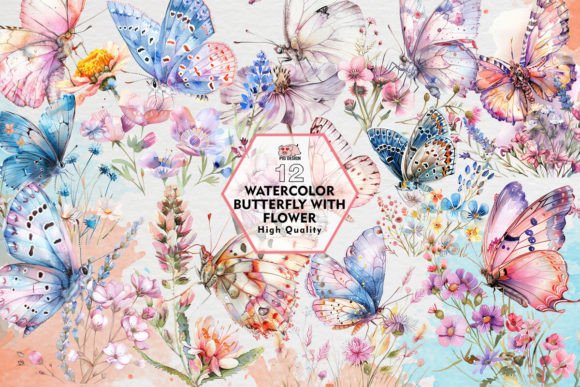
Watercolor Butterfly with Flower Clipart is not a single illustration. It is a collection of hand-painted elements that bring natural softness to any composition. The butterflies are rendered with translucent washes of color, often blending multiple hues within a single wing. The flowers vary from delicate buds to fuller blossoms, each with subtle shading that mimics real watercolor on paper. There is no harsh vector sharpness here. Instead, you get irregular edges, gentle fades, and the kind of imperfection that feels human.
The personality of this clipart leans romantic, soft, and organic. It is not rigid or geometric. It does not try to be modern minimalist. Instead, it embraces a more whimsical, almost nostalgic aesthetic. Think of a botanical journal from the late 1800s, but reimagined with contemporary color palettes. The style works equally well on white backgrounds, where the watercolor blooms fully, and on darker surfaces, where the lighter pigments seem to glow.
This is a premium font-adjacent design asset in the sense that, like a well-crafted typeface, it carries its own atmosphere. You do not just add it to a layout. You build a mood around it.
Where Watercolor Butterfly with Flower Clipart Excels
In practice, this clipart adapts to a surprisingly wide range of projects. Here is where it tends to deliver the strongest results.
Brand Identity and Logo Design
If you are branding a business that values natural ingredients, handmade processes, or gentle aesthetics, this clipart becomes a cornerstone. Florists, botanical skincare lines, organic tea companies, and wedding planners all benefit from the soft, trustworthy feel it brings. A butterfly paired with a single flower can serve as a logo mark that feels both refined and approachable. It avoids the coldness of many corporate logos while still looking professional.
Editorial Design and Publishing
Magazines, blogs, and books centered on nature, wellness, or lifestyle publishing find natural synergy here. Use Watercolor Butterfly with Flower Clipart as chapter openers, section dividers, or decorative accents alongside pull quotes. The watercolor texture provides a tactile break from rigid text columns. Readers pause. They linger. That is the goal.
Packaging Design
Product packaging for candles, bath products, stationery, or gift items benefits from the handmade feel of watercolor. When a customer picks up a box and sees a butterfly and flower rendered with visible brush texture, they perceive care. The product feels artisanal, even if it is produced at scale. Pair the clipart with a clean serif font for the product name and a sans serif font for ingredients or descriptions to create a clear visual hierarchy.
Social Media Graphics
Instagram, Pinterest, and Facebook thrive on visual storytelling. A single butterfly with a flower can anchor a quote, announce a seasonal sale, or serve as a background for a product reveal. Because watercolor has inherent depth, even a flat graphic feels layered. This helps your content stop the scroll without relying on flashy effects.
Personal and Craft Projects
Wedding invitations, save-the-dates, greeting cards, and bullet journal pages are obvious fits, but the clipart also works beautifully for wall art prints, nursery decor, and handmade gifts. The commercial license of most Watercolor Butterfly with Flower Clipart sets allows you to use the assets in physical products you sell, which opens up Etsy shops and local craft fairs as viable avenues.
How It Influences Readability, Hierarchy, and Brand Perception
Unlike a display font that shapes letterforms, clipart shapes the space around content. This distinction matters. When you place a butterfly and flower near a headline or a product name, you create a focal point that guides the eye. The viewer sees the illustration first, then moves to the text. That sequence, illustration then message, builds emotional context before the rational brain processes the words.
For brand identity, this clipart communicates values like patience, naturalness, and care. A brand that uses watercolor elements signals that it is not in a rush. It values craft over speed. This perception is especially powerful for small businesses competing against larger, more impersonal competitors. You cannot always match their pricing, but you can absolutely match their polish, and this clipart helps you do that with a distinct personality.
Consistency across touchpoints becomes easier when you have a unified visual asset. Use the same butterfly and flower motif on your website header, product labels, email headers, and packaging inserts. Over time, that repeated image becomes a shorthand for your brand. People recognize it before they read your business name.
Practical Guidance for Choosing and Using This Clipart
Not all clipart sets are equal. When evaluating Watercolor Butterfly with Flower Clipart for a project, consider these factors.
Project Fit
Ask yourself where the piece will live. Digital screens display watercolor differently than printed paper. On screen, the translucency can sometimes look washed out if the background is not carefully chosen. Print, on the other hand, often enhances watercolor depth, especially on uncoated or textured paper stock. If your primary use is digital, test the clipart on various background colors before committing.
Testing Font Pairings
Because the clipart is soft and organic, it pairs best with typefaces that share some of that warmth. A script font with natural stroke variation complements the hand-painted feel. A serif font with gentle curves adds a classic touch. Avoid rigid sans serif fonts with strict geometric forms, they fight the organic nature of the art. For a modern contrast, try a clean sans serif font with generous letter spacing to let the clipart breathe.
Reviewing Included Styles
Look for sets that offer multiple color variations, isolated elements, and composited scenes. Some Watercolor Butterfly with Flower Clipart collections include individual butterflies, individual flowers, and combined arrangements. Having both isolated and grouped options gives you more flexibility when building layouts. You can place a single butterfly in a corner or cluster several flowers as a background element.
Readability Considerations
Clipart is decorative, not functional in the way a typeface is. But it can absolutely support readability by creating contrast, framing content, or providing a visual rest between text sections. Avoid placing text directly over heavily textured areas of watercolor. Instead, position text on the lighter, more transparent parts of the illustration or offset the text slightly with a subtle drop shadow or opaque background box.
Commercial Licensing
This is the part that gets overlooked far too often. Always verify the commercial license before using Watercolor Butterfly with Flower Clipart in products you sell. Many premium sets allow commercial use, but some restrict print runs or require attribution. If you plan to sell physical products on a platform like Etsy or Amazon, or if you are using the clipart in branding for a paying client, make sure the license covers those specific uses. A few extra minutes reviewing terms can save you a full redesign later.
Real-World Examples and Design Observations
I worked with a small botanical skincare brand last year that needed a visual identity overhaul. Their existing packaging used stock photography of flowers, which looked generic and dated. We replaced those photos with a cohesive set of Watercolor Butterfly with Flower Clipart in custom color-adjusted palettes that matched their product ingredients. The result was a distinct shift in customer perception. Sales did not jump overnight, but engagement metrics, time spent on product pages, and repeat purchase rates all improved over three months. Customers mentioned feeling the products were more natural despite the formula staying identical.
That is the power of a well-chosen design asset. It is not about decoration. It is about signaling the right emotional truth.
Another designer I know uses the clipart extensively in wedding stationery. She layers multiple butterflies at different scales around the couple's names. By varying opacity and rotation, she creates depth without adding clutter. The work reads as romantic but not saccharine. The handwritten font she pairs it with reinforces the personal feel, and the overall result earns her consistent referrals.
One observation worth noting: do not overuse the clipart. A single butterfly with a flower placed strategically often carries more weight than a page covered in them. Let the watercolor texture do its work. White space is not emptiness. It is the frame that lets the art breathe.
Final Thoughts on Making It Work for You
Watercolor Butterfly with Flower Clipart is not a trend. It has been present in design for decades because it taps into something fundamental: our attraction to organic forms and gentle color. Whether you are a content creator building a visual library, a small business owner establishing a brand, or a publisher seeking consistent decorative assets, this clipart offers a reliable, beautiful solution.
Take the time to test it in your actual layouts. Try it with different font pairings. Adjust colors to match your existing palette. And always, always read the license. With a little intention, a simple butterfly and flower become more than clipart. They become part of how people remember you.